ENG
ENG

 Alex Martin
 China Opens World's First Fully Robot‑operated Hotel on Shenzhen‑Zhongshan Link
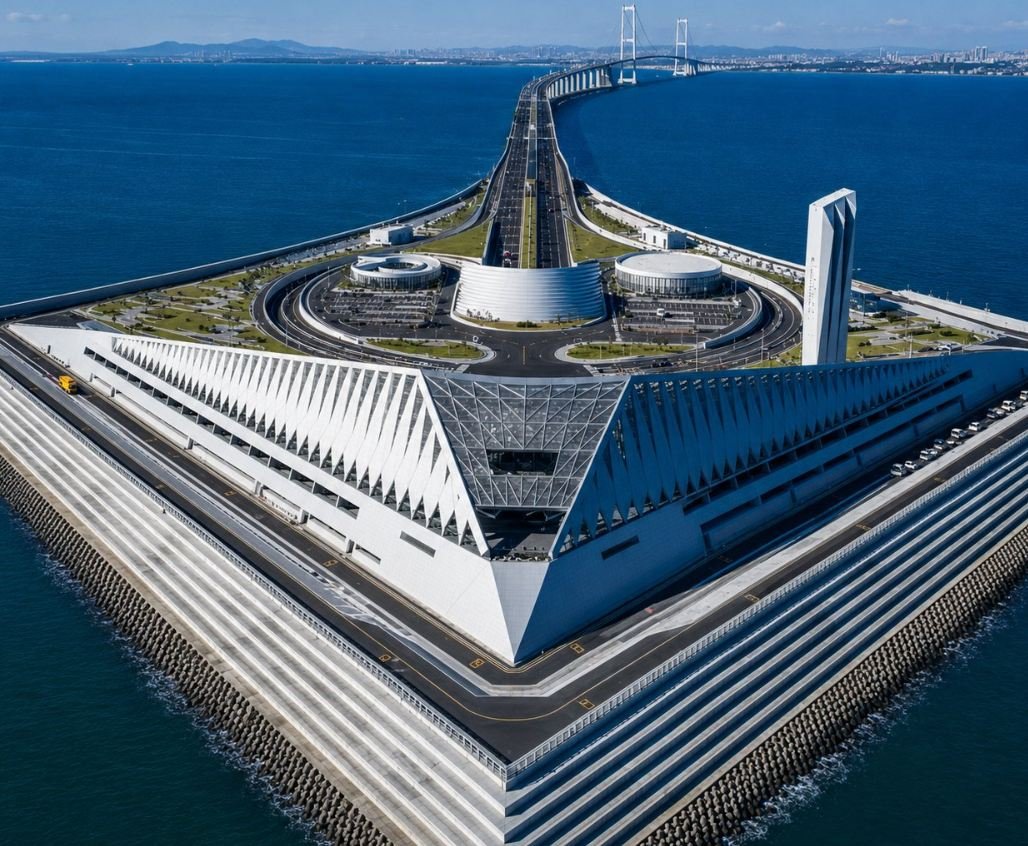
A hotel with no human staff is moving from science fiction to reality on the West Artificial Island of the Shenzhen–Zhongshan Link in Guangdong Province.
Shenzhen robotics firm Pudu Robotics has partnered with Shenzhen Culture and Tourism Industry Development to build what is being billed as the world’s first fully robot‑operated hotel. Trial operations are slated to begin in late 2026, with a full public launch expected in early 2027.
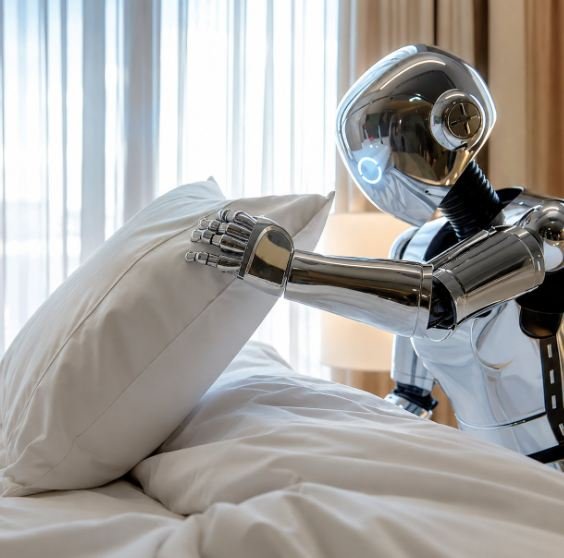
 The property will include 44 high‑end rooms and deploy robots for every guest‑facing and back‑of‑house task: guest reception, luggage handling, room deliveries, housekeeping, food service, security patrols, and even interactive companionship.
Rather than many different control systems, the entire fleet will run on Pudu’s embodied AI platform, PuduFM 1.0, giving each robot a shared intelligence framework so they can coordinate tasks and adapt to guests’ needs. “No service gaps and no human interruptions,” said Guo Cong, CTO of Pudu Robotics.
This project showcases several trends reshaping hospitality: robotics and embodied AI, contactless services that emerged during the pandemic, and operational efficiency pressures in a tight labor market. For guests, the appeal is novelty and seamless convenience: robotic concierges that check you in, autonomous carts that deliver meals or extra towels, and robots that perform routine cleaning without human scheduling conflicts.
For operators, automation promises lower ongoing labor costs, standardized service quality, and round‑the‑clock operation. The shared AI framework could reduce integration headaches commonly faced when deploying mixed fleets from multiple vendors. It also provides a controlled environment to test human–robot interaction models at scale before broader rollouts.
Despite the headline-grabbing idea of a “staffless” hotel, several practical issues remain. Robots can handle repetitive tasks well, but complex problem solving, nuanced human judgment, and crisis response still favor trained humans. Guests with accessibility needs or those who prefer human interaction may find a fully robotic model less comfortable.
Privacy and data security are also important: continuous sensors and camera systems needed for navigation and service must be managed under strict privacy policies and cybersecurity protections.
Cultural context is relevant too. In China, adoption of service robots has accelerated in retail, dining, and transport hubs, supported by large robotics startups and government initiatives. The Shenzhen project benefits from local tech infrastructure and a regulatory environment that encourages innovation, factors that make it a plausible first site for full automation.
The late‑2026 trials will likely focus on operational robustness: route planning in corridors, elevator integration, multi‑robot coordination, and handling of edge cases such as spills, equipment failures, or guests who need assistance beyond a robot’s capabilities.
Feedback from these trials will determine whether the model expands to larger properties or hybrid designs where robots handle routine work and humans manage supervisory roles, guest relations, and emergencies.
Bottom Line
Pudu Robotics’ robot‑run hotel on the Shenzhen-Zhongshan Link is a high‑profile experiment that pushes the boundary of automated hospitality. It showcases the technical possibility of end‑to‑end robotic service while raising practical and ethical questions about guest experience, accessibility, and safety.
Source: Xinhua News Agency, Global Times, New Atlas (June 2026)
Comments
Comments are closed.








.jpg)