ENG
ENG

 David
David Top 15 Countries with the Most Powerful Navies in the World
The ocean has always been the ultimate arena of geopolitical power. From the age of wooden frigates and broadside cannons to nuclear-powered supercarriers and hypersonic anti-ship missiles, the nation that rules the seas has, in many ways, ruled the world.
Today, naval power remains one of the most critical indicators of a country's ability to project force, protect trade routes, and deter adversaries thousands of miles from its shores.
According to the World Directory of Modern Military Warships (WDMMW), here is a definitive look at the 15 most powerful navies on the planet, what makes them formidable, and what role they play in the global balance of power.
- United States Navy
- People's Liberation Army Navy (PLAN)
- Russian Navy
- Indonesian Navy (TNI-AL)
- Republic of Korea Navy (ROKN)
- Japan Maritime Self-Defense Force (JMSDF)
- Indian Navy
- French Navy (Marine Nationale)
- Royal Navy
- Italian Navy (Marina Militare)
- Turkish Navy (Türk Deniz Kuvvetleri)
- Republic of China Navy (ROCN)
- Egyptian Navy
- Korean People's Navy (KPN)
- Bangladesh Navy
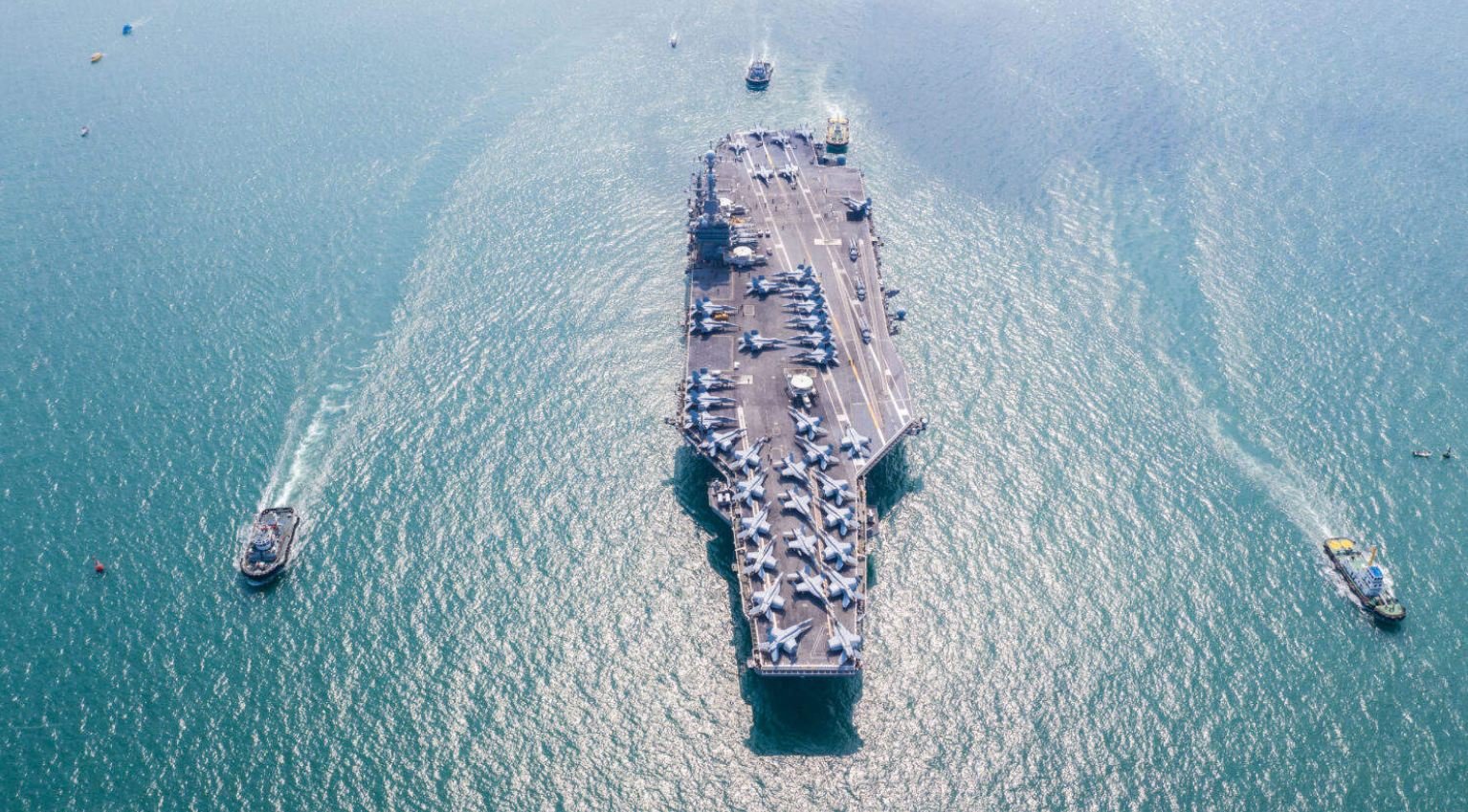
1. United States Navy
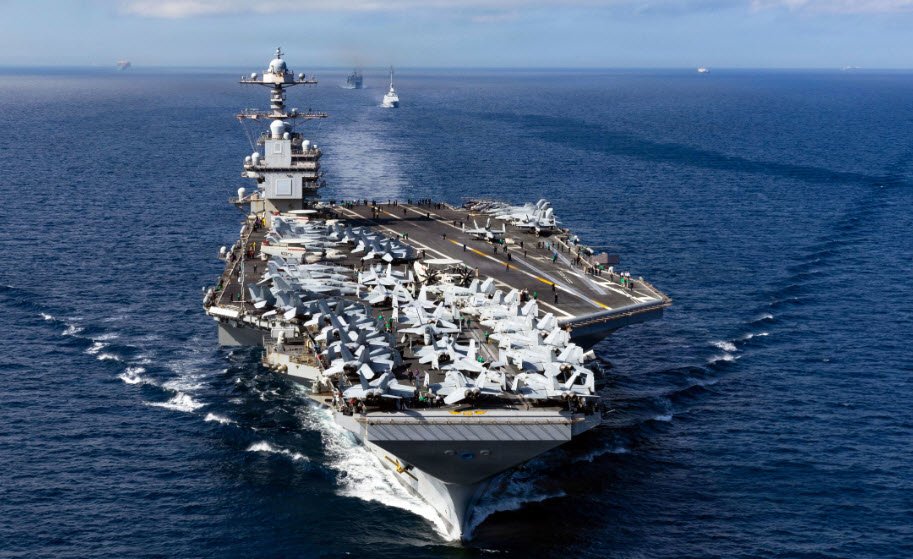
There is no close second. The United States Navy is, by virtually every metric, the most powerful naval force in human history. With 11 nuclear-powered aircraft carriers more than the rest of the world combined, the U.S. Navy operates across every ocean simultaneously. Its carrier strike groups are essentially mobile air bases, each escorted by guided-missile destroyers, cruisers, and submarines.
The Navy's fleet of Virginia-class and Ohio-class submarines gives it unmatched undersea dominance, while its global network of forward-deployed bases allows rapid response anywhere on Earth. The F/A-18 Super Hornet, the F-35C Lightning II, and the Tomahawk cruise missile form the offensive backbone of a force that has not faced a peer rival at sea since World War II.
2. People's Liberation Army Navy (PLAN)
China's navy has undergone the most dramatic expansion of any military force in modern history. In just two decades, the PLAN has transformed from a coastal defence force into a genuine blue-water navy with three aircraft carriers (with more under construction), a growing fleet of Type 055 destroyers among the most capable surface combatants in the world and an aggressive submarine-building programme.
The PLAN's focus on anti-access/area-denial (A2/AD) strategies, combined with its growing overseas logistics network, signals Beijing's ambition to challenge U.S. dominance in the Indo-Pacific and beyond. By sheer fleet size, China now operates the world's largest navy.
.jpg)
3. Russian Navy
Russia's navy carries the institutional memory of Soviet-era naval power, and while its conventional surface fleet has suffered from chronic underfunding since the Cold War's end, it remains a formidable strategic force. The Russian Navy's greatest asset is its submarine fleet particularly its nuclear-ballistic missile submarines (SSBNs) that form a critical leg of Russia's nuclear triad.
Its Kalibr cruise missiles, launched from submarines and small corvettes, demonstrated deadly effectiveness in Syria and have since become a cornerstone of Russian naval doctrine. The conflict in Ukraine has exposed vulnerabilities in Russia's Black Sea Fleet, but its Arctic capabilities and nuclear deterrent keep it firmly in the top tier.
4. Indonesian Navy (TNI-AL)
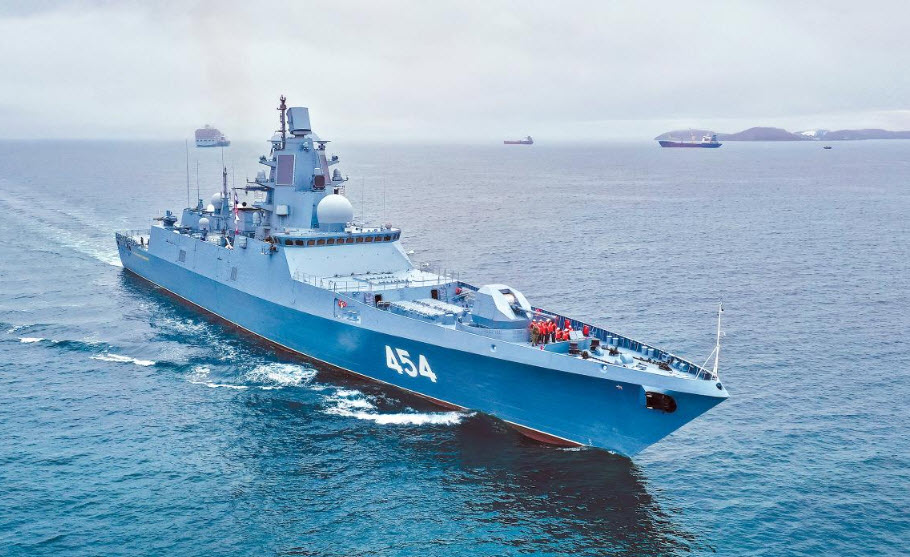
Indonesia commands the world's largest archipelagic state over 17,000 islands straddling some of the busiest sea lanes on Earth. The TNI-AL has invested heavily in modernising its fleet, acquiring new submarines from South Korea, frigates from Italy and the Netherlands, and domestically produced patrol vessels.
Indonesia's strategic location between the Indian and Pacific Oceans, and its proximity to the South China Sea, gives its navy outsized geopolitical significance. Its growing focus on maritime sovereignty — particularly around the Natuna Islands underscores a nation increasingly aware of its naval responsibilities.
.jpg)
5. Republic of Korea Navy (ROKN)
South Korea's navy punches well above its weight. The ROKN operates KDX-III Batch II destroyers 10,000-tonne Aegis-equipped warships that rank among the most capable surface combatants in the world. It also operates a fleet of German-designed Type 214 submarines, landing helicopter assault ships, and maintains a constant state of readiness against the ever-present threat from the North.
South Korea's domestic defence industry is now world-class, with its warships being exported to multiple countries. The ROKN is also developing its own aircraft carrier, signalling ambitions for true blue-water capability.
.jpg)
6. Japan Maritime Self-Defense Force (JMSDF)
Constitutionally constrained but operationally excellent, the JMSDF is one of the most capable navies in Asia. Its Izumo-class helicopter destroyers are being retrofitted to carry F-35B stealth fighters, effectively converting them into light aircraft carriers, a significant evolution. Japan also operates some of the world's most advanced conventionally powered submarines and a sophisticated fleet of Aegis destroyers.
Japan's anti-submarine warfare (ASW) capabilities are arguably the finest in the region, a critical asset in waters increasingly contested by Chinese and Russian submarines.
.jpg)
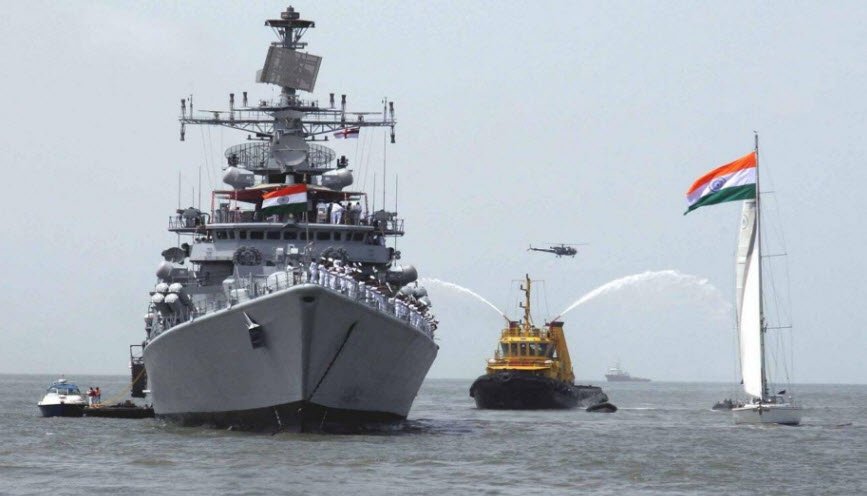
7. Indian Navy
India's navy is the dominant force in the Indian Ocean Region (IOR) and is undergoing its most ambitious expansion in decades. The commissioning of INS Vikrant, India's first domestically built aircraft carrier was a landmark moment, giving India a two-carrier operational capability alongside INS Vikramaditya.
The Indian Navy operates a diverse fleet of Russian and Western platforms, nuclear-powered attack submarines, and a growing fleet of P-8I maritime patrol aircraft. Its strategic doctrine focuses on securing sea lanes critical to India's energy imports and countering Chinese naval expansion into the Indian Ocean.
8. French Navy (Marine Nationale)
France is the only European nation with a nuclear-powered aircraft carrier, the Charles de Gaulle and the only EU member capable of independent global power projection. The Marine Nationale operates Barracuda-class nuclear attack submarines, Mistral-class amphibious assault ships, and Aquitaine-class frigates, giving it a genuinely balanced and capable fleet.
France's overseas territories scattered across the globe from the Caribbean to the Pacific to the Indian Ocean give its navy a legitimate worldwide presence. It remains the standard-bearer for European naval power.
.jpg)
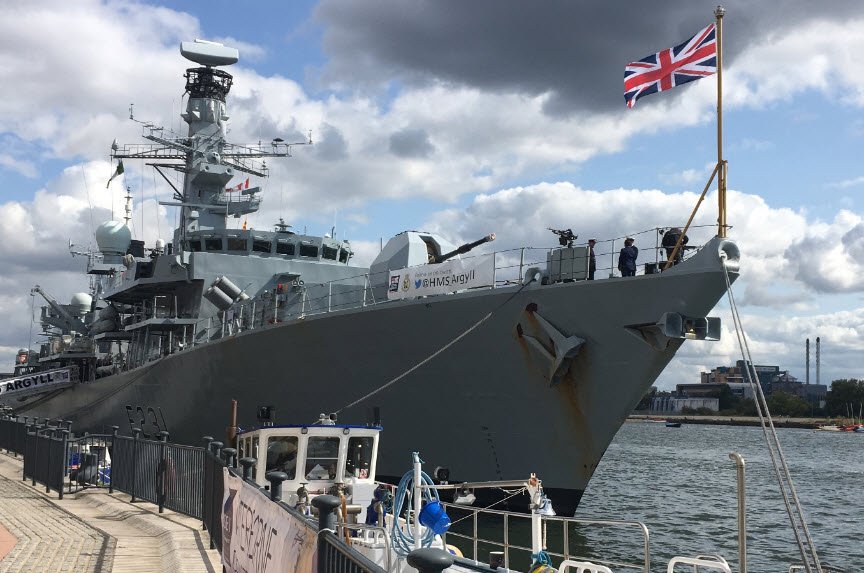
9. Royal Navy
The Royal Navy that once commanded the world's oceans has been significantly reduced since its Cold War peak, but the commissioning of two Queen Elizabeth-class aircraft carriers has restored genuine carrier strike capability for the first time in a decade. The HMS Queen Elizabeth and HMS Prince of Wales, each carrying F-35B stealth fighters, represent the centrepiece of a renewed British maritime strategy.
The Royal Navy also operates Astute-class nuclear attack submarines widely regarded as among the world's best along with Daring-class destroyers and Type 31 frigates currently entering service.
10. Italian Navy (Marina Militare)
Italy's navy is compact but highly capable. The Marina Militare operates the ITS Cavour, a STOVL aircraft carrier now equipped with F-35Bs along with the newer ITS Trieste, a landing helicopter dock that can also operate F-35Bs, effectively giving Italy two fixed-wing aviation platforms.
Italy's naval shipbuilding industry is world-class, with Fincantieri producing vessels for navies across the globe. Its fleet of FREMM multi-mission frigates is considered among the most versatile in NATO.
.jpg)
11. Turkish Navy (Türk Deniz Kuvvetleri)
Turkey operates the largest navy in the Black Sea region and one of the most significant in the Mediterranean. Its most ambitious project, TCG Anadolu, a light aircraft carrier designed to operate the Bayraktar TB3 naval drone marks a bold entry into carrier aviation.
Turkey's domestic defence industry has grown explosively over the past decade, producing its own frigates, corvettes, submarines, and the now-famous Bayraktar drones. Its control of the Bosphorus Strait, the only passage between the Black Sea and the Mediterranean gives it immense strategic leverage.
.jpg)
12. Republic of China Navy (ROCN)
Taiwan's navy operates under perhaps the most intense strategic pressure of any fleet in the world, facing the constant threat of a Chinese amphibious invasion across the Taiwan Strait. The ROCN's strategy centres on asymmetric deterrence using fast attack missile boats, minelaying, and submarine warfare to make any invasion prohibitively costly.
Taiwan is currently building its own domestically designed submarines, the first of which ROCS Hai Kun was launched in 2023. Its Kidd-class destroyers and Perry-class frigates, upgraded with modern sensors and weapons, form the backbone of its surface fleet.
.jpg)
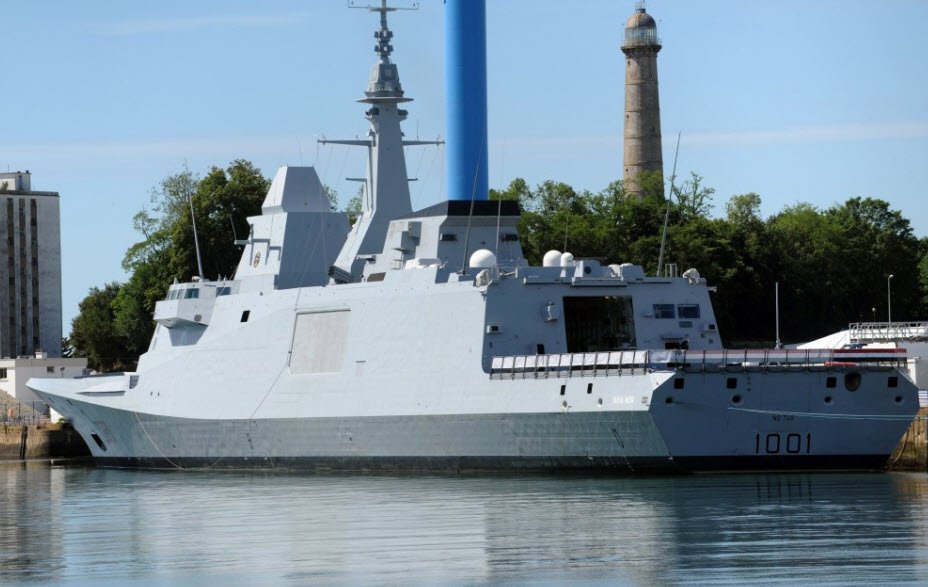
13. Egyptian Navy
Egypt has invested heavily in its navy over the past decade, acquiring Mistral-class helicopter carriers from France, FREMM frigates, and a mix of submarines and fast attack craft. Its navy operates in three bodies of water simultaneously, the Mediterranean, the Red Sea, and the Suez Canal giving it unparalleled importance as a maritime crossroads nation.
With the Suez Canal generating billions in annual revenue and representing a critical chokepoint in global trade, Egypt has strong economic and strategic incentives to maintain a robust naval presence.
14. Korean People's Navy (KPN)
North Korea's navy is unconventional by design. Rather than investing in expensive large surface combatants, Pyongyang has built a vast fleet of miniature submarines, midget submarines, and fast attack torpedo boats numbering in the hundreds optimised for coastal operations and asymmetric harassment of South Korean and U.S. forces.
The KPN also reportedly operates submarine-launched ballistic missiles (SLBMs), giving it a potential second-strike nuclear capability that complicates the strategic calculus for its adversaries. While not a conventional naval power, its sheer unpredictability and the nuclear dimension make it impossible to ignore.
.jpg)
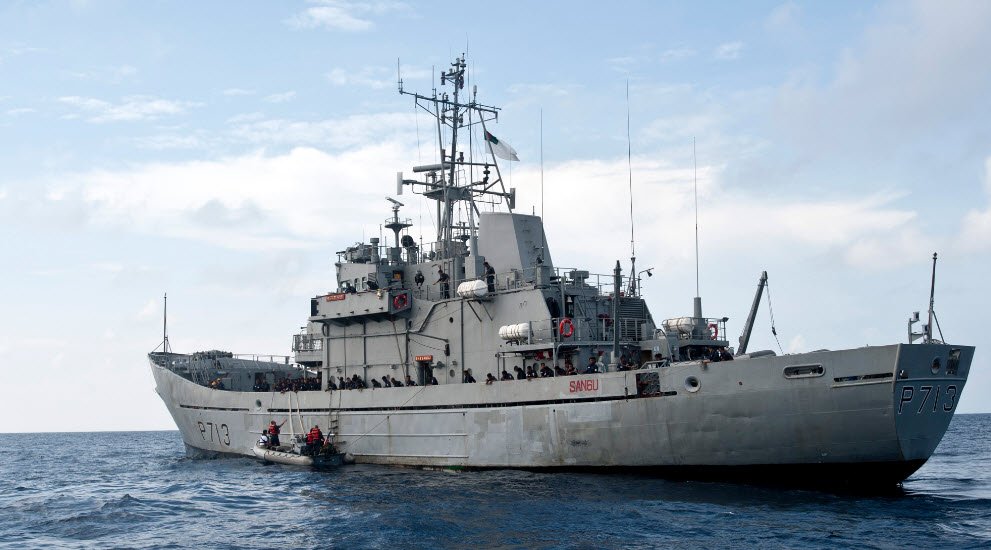
15. Bangladesh Navy
Bangladesh may surprise many on this list, but the country has made remarkable strides in naval development over the past decade. Geographically situated at the top of the Bay of Bengal one of the world's busiest maritime regions, Bangladesh has acquired two Ming-class submarines from China, modern frigates, and offshore patrol vessels, forming the nucleus of what it calls a "three-dimensional navy."
The Bangladesh Navy is a key player in regional maritime security, disaster response, and the protection of a coastline and exclusive economic zone that are vital to a country whose economy is deeply tied to the sea.
Conclusion
The distribution of naval power in 2025 reflects a world in transition from the unchallenged American dominance of the post-Cold War era towards a more contested, multipolar maritime order. China's relentless build-up, Russia's nuclear posture, India's rising ambitions, and the rearmament of Japan all point to a new era of maritime competition.
For smaller nations like Indonesia, Bangladesh, and Taiwan, navies represent not just military power but sovereignty, economic survival, and national identity. As climate change opens new Arctic routes and tensions flare over contested waters from the South China Sea to the Black Sea, one truth remains constant: the nation that controls the seas shapes the world.
Comments
Comments are closed.





.jpg)